
Key Takeaways
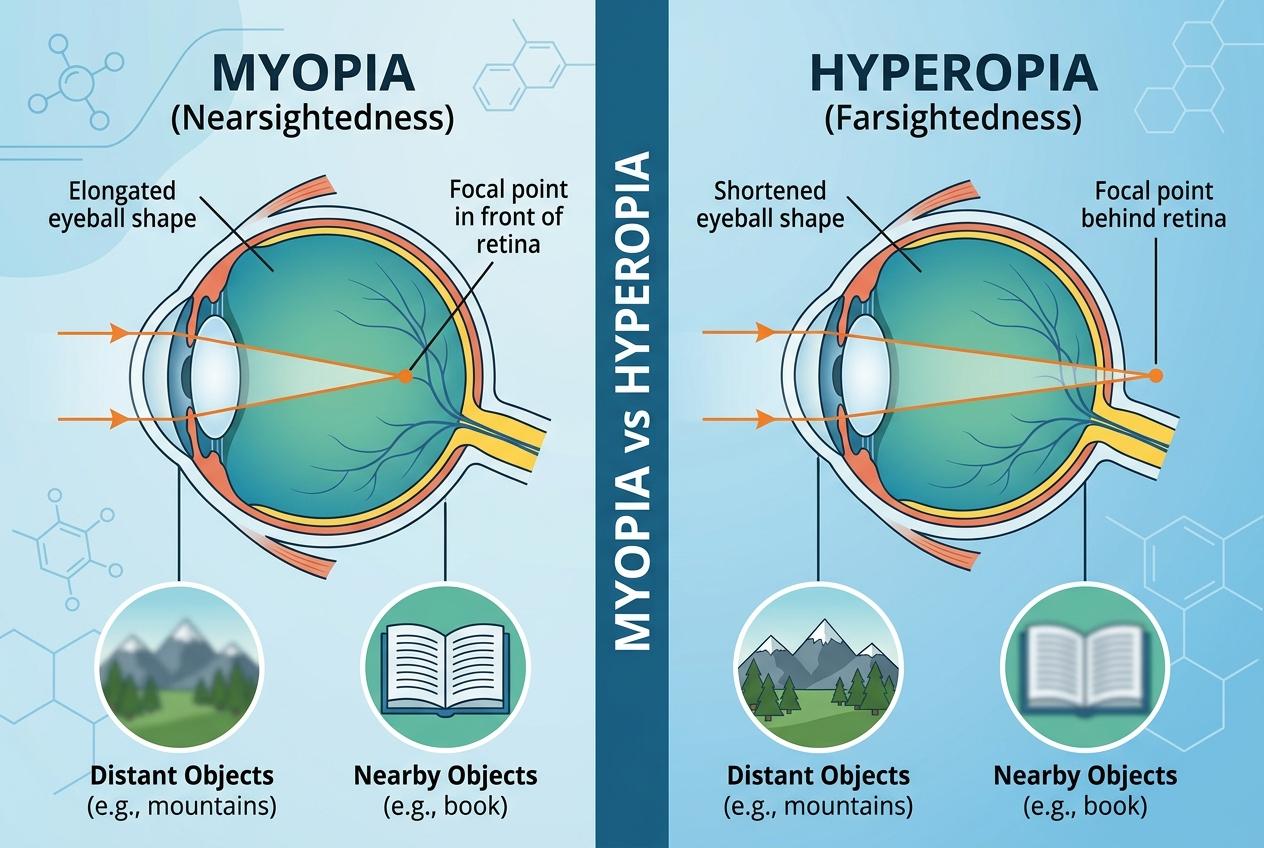
- Myopia makes distant objects blurry while close objects appear clear
- Hyperopia makes near vision appear blurry while distance vision appears clear
- Your specific eye shape changes how light focuses on the retina, which is the back of the eye
- Prescription glasses or contacts can help you see comfortably and clearly
- An eye doctor in St. Albert and Spruce Grove can identify your specific prescription during an eye exam
Maybe highway signs look blurry until you drive right up to them, or maybe you have to squint to read your favourite book, giving you a headache after just a few pages. These symptoms can be a sign that you’re experiencing a refractive error, which is a problem with how your eye bends light. This is a common problem, and our friendly team at Vision Care Centres can determine if you need vision correction during a comprehensive eye exam.
The main difference between myopia and hyperopia is that myopia makes distant objects look blurry, while hyperopia makes close objects look blurry. Both of these problems can be corrected with glasses or contact lenses, giving you clear vision.
The Basics of Nearsightedness and Farsightedness
An Overview of Nearsightedness
Myopia is the medical term for nearsightedness. This happens when light focuses in front of the retina (at the back of your eye) instead of directly on it, causing your distant vision to be blurry. This can happen because the eyeball has grown too long from front to back.
That’s part of why myopia is common in kids. As children’s eyes grow, myopia often progresses, causing their prescription to become stronger over time, which can be damaging to their long-term eye health. Myopia control is designed to slow the rate at which their eye grows, so they end up with a lower prescription.
An Overview of Farsightedness
Hyperopia is the medical word for farsightedness. This happens when light focuses behind the retina instead of directly on it, making nearby objects look blurry. Hyperopia can also be caused by your cornea (the outer layer of your eye) being too flat. It can impact any age, but some people may find that their hyperopia isn’t very noticeable when they’re young.
Common Signs and Symptoms to Watch For
Vision issues often sneak up slowly, so you may not realize you’re not seeing clearly until everyday tasks become difficult.
Signs You Might Be Nearsighted
If you notice any of these signs, it’s a good idea to book an eye exam:
- You need to squint to read distant road signs while driving or the TV screen across the room
- You get headaches from trying to make out words from far away
- Your eyes feel tired after squinting at distant objects all day
Signs You Might Be Farsighted
Farsightedness brings its own set of daily challenges. This type of refractive error impacts close-up vision, which can demand intense focus from your eye muscles. If you’re constantly focusing to see, you’ll likely begin to notice some physical symptoms alongside blurry vision.
Book an eye exam if you notice:
- You need to squint to see small text in books or menus
- You get headaches after long periods of close-up focusing, such as reading a book or using a tablet
- Your eyes feel strained while or after doing nearby tasks like sewing or crafting
Simple Ways to Correct Your Sight
Glasses and Contact Lenses
With today’s technology, you have a wide range of options to correct your vision and reduce eye discomfort. Glasses and contact lenses work by adjusting the light rays before they even enter your eye.
Glasses can be a simple, easy way to clear your vision while adding a stylish accessory to your look. If you prefer not to have something on your face all day, you may prefer contact lenses, which sit directly on the surface of your eye to provide you with clear sight.
Modern Vision Procedures
For those who want to rely even less on glasses or contacts, laser surgery options may be a good choice to consider. These procedures alter the clear front part of the eye called the cornea to bend light and provide you with clear vision. A professional consultation helps determine if this path suits you.
Book an Eye Exam
If you’ve been struggling to see clearly recently, it may be time to come see us. We have locations in St. Albert and Spruce Grove, making it convenient to find an eye doctor for your whole family. Our optometrists can talk you through your options, answer your questions, and help you decide what may be right for you. Book your appointment today!